

Contractor Safety Induction That Protects Site Teams
- Coachaj Lifesaver
- Aug 20
- 5 min read

A contractor can arrive with an excellent company safety record and still be exposed to unacceptable risk within minutes of entering an unfamiliar workplace. Different traffic routes, emergency signals, permit rules, access controls and local hazards all change the picture. A contractor safety induction is the point at which your site rules become clear, understood and actionable - before work begins.
For organisations in Abu Dhabi and across the UAE, this is more than an administrative requirement. It is a practical duty of care that protects contractor personnel, employees, visitors and the continuity of the operation. Done properly, an induction does not simply prove that someone watched a presentation. It establishes whether they can work safely in the environment they are about to enter.
What a contractor safety induction must achieve
The purpose is not to repeat every policy in the organisation’s health and safety manual. Contractors need the information that affects their work today, at this location, during this shift or project phase. They must know what is expected of them, where the boundaries are and what to do when conditions change.
A useful induction should confirm four things: the contractor is authorised to be on site, has the competence and documentation required for the assigned work, understands local risks and controls, and knows how to raise a concern or respond to an emergency. If any of these points remains unclear, the person is not ready to start work.
This matters particularly where multiple employers share a workplace. A facilities contractor, construction team, specialist engineer and delivery driver may each follow sound internal procedures, yet their activities can create new risks when they overlap. The site operator must coordinate those interfaces rather than assume each company will manage them independently.
Build the induction around real site risks
Generic content is quick to distribute, but it rarely prepares people for the hazards that cause incidents. Start with a site-specific risk review. Consider the work area, simultaneous operations, vehicle movements, restricted zones, energy sources, work at height, confined spaces, chemicals, heat stress and the public or workforce that may be affected.
The level of detail should match the risk. Someone attending a short meeting needs a visitor briefing and escort arrangements, not a full operational induction. A contractor undertaking hot work, electrical isolation or excavation needs a far deeper briefing, supported by permits, method statements and task-level controls. Treating both groups the same either wastes time or leaves critical gaps.
Emergency arrangements deserve particular attention. Contractors should be able to identify the alarm, assembly point, emergency exits, first aid facilities, reporting process and emergency contact route without searching for a handbook. They also need to understand any site-specific response arrangements, such as muster procedures, security protocols or the location of an emergency control room.
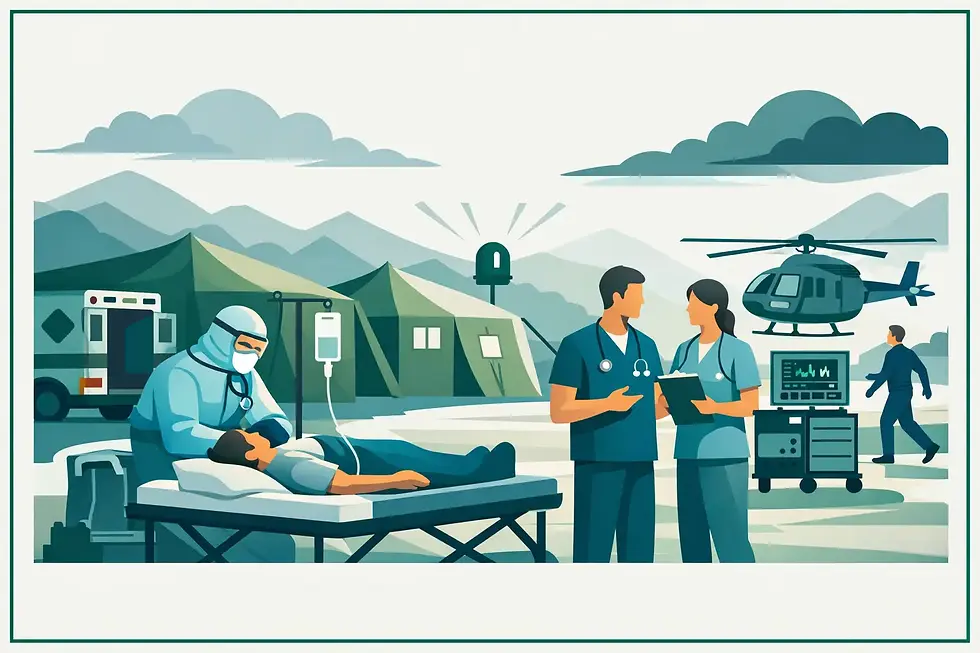
First aid is often mentioned too briefly. Explain how to call for help, where trained first aiders and equipment can be found, and how access will be maintained for emergency responders. On large sites or remote projects, the response plan may involve designated vehicles, medics, communications equipment or evacuation arrangements. The induction should reflect the actual capability available, not an assumed standard response.
Make language and understanding part of the control
A signature is not evidence of understanding. Workforces in the UAE are often multilingual, and safety-critical instructions must be accessible to the people carrying out the work. Use clear language, diagrams, maps, photographs and demonstrations where appropriate. Provide translated material or a competent interpreter when the risks and workforce require it.
Avoid relying on acronyms, dense legal wording or long slide decks. Ask short, practical questions: Where do you report an incident? Which route do pedestrians use? What must be in place before hot work starts? A supervisor can then address misunderstanding before it becomes exposure.
This approach also identifies people who need further instruction. It is better to pause a start than to allow a worker to proceed with uncertainty around a critical control.
The information every contractor needs before work starts
While content must be tailored, most operational inductions need to cover a consistent core. This includes site access and security arrangements; required personal protective equipment; welfare facilities; vehicle and pedestrian segregation; incident and near-miss reporting; environmental controls; stop-work authority; and the permits or approvals relevant to the task.
Contractors should also understand who controls the work. Name the site representative, contractor supervisor and permit issuer where applicable. Clarify escalation routes for changes to scope, unexpected hazards, damaged equipment, adverse weather or conflicts with other activities. Ambiguity around authority is a common cause of unsafe improvisation.
It is equally valuable to set behavioural expectations. Mobile phone restrictions, smoking rules, housekeeping standards, photography controls and rules on alcohol or drugs may seem routine, but they are site controls, not optional preferences. Explain the reason for them in direct terms and apply them consistently to employees and contractors alike.
For higher-risk work, the induction is only the first gate. It cannot replace verification of licences, competence certificates, medical fitness where required, equipment inspection records, risk assessments, method statements or toolbox talks. A person may understand the site rules but still be unsuitable for the specific task.
Deliver induction at the right time, not just once
The best time for a full induction is before access is granted and before the contractor mobilises to the work area. Trying to brief people after tools and equipment are already positioned creates pressure to rush. Plan induction capacity into the project schedule, especially when several contractor teams are expected to arrive at once.
However, a single induction does not cover a changing workplace. Construction phases move, temporary routes change, weather affects conditions and new activities introduce different hazards. Use concise re-inductions or targeted briefings whenever a material change affects the contractor’s work.
Set a clear validity period, but do not rely on expiry dates alone. An annual refresher may meet an internal rule, yet a contractor returning after six months to a substantially altered site needs an updated orientation. Conversely, repeatedly putting experienced crews through unchanged content can lead to disengagement. The answer is a documented process that distinguishes between a full induction, a return-to-site update and a task-specific briefing.
Keep records that demonstrate control
Induction records should show more than attendance. Record the individual’s name, employer, date, site or project, induction version, trainer or responsible person, language support provided and any competence checks completed. Where digital systems are used, ensure supervisors can verify authorisation easily at the point of work.
Recordkeeping supports compliance, but its greater value is operational. If an incident occurs, the organisation should be able to establish what information was issued, whether changes were communicated and whether the contractor had permission to perform the activity. Gaps in these records often reveal wider failures in contractor management.
Protect personal information appropriately and retain only what is necessary under the organisation’s policies and applicable requirements. Confidentiality matters, particularly when records include identity documents, medical declarations or competency details.
Test the system in the field
A contractor safety induction should be reviewed through observation, not only through presentation feedback. Walk the site with supervisors. Can contractors identify the pedestrian route? Are they wearing the stated PPE? Do they know whom to contact when a permit condition changes? Are emergency maps current and visible?
Near misses, audit findings and contractor feedback should feed back into the induction content. If the same confusion appears repeatedly, the issue may be an unclear briefing, poor signage or a control that is difficult to follow in practice. Correct the system rather than blaming individuals for predictable misunderstandings.
For organisations managing complex operations, an experienced training and safety partner can help design induction content that is aligned with site risks, workforce needs and emergency arrangements. The objective remains simple: every contractor should arrive prepared, be briefed with clarity and leave the site safely. That standard is built one well-controlled start of work at a time.


Comments