
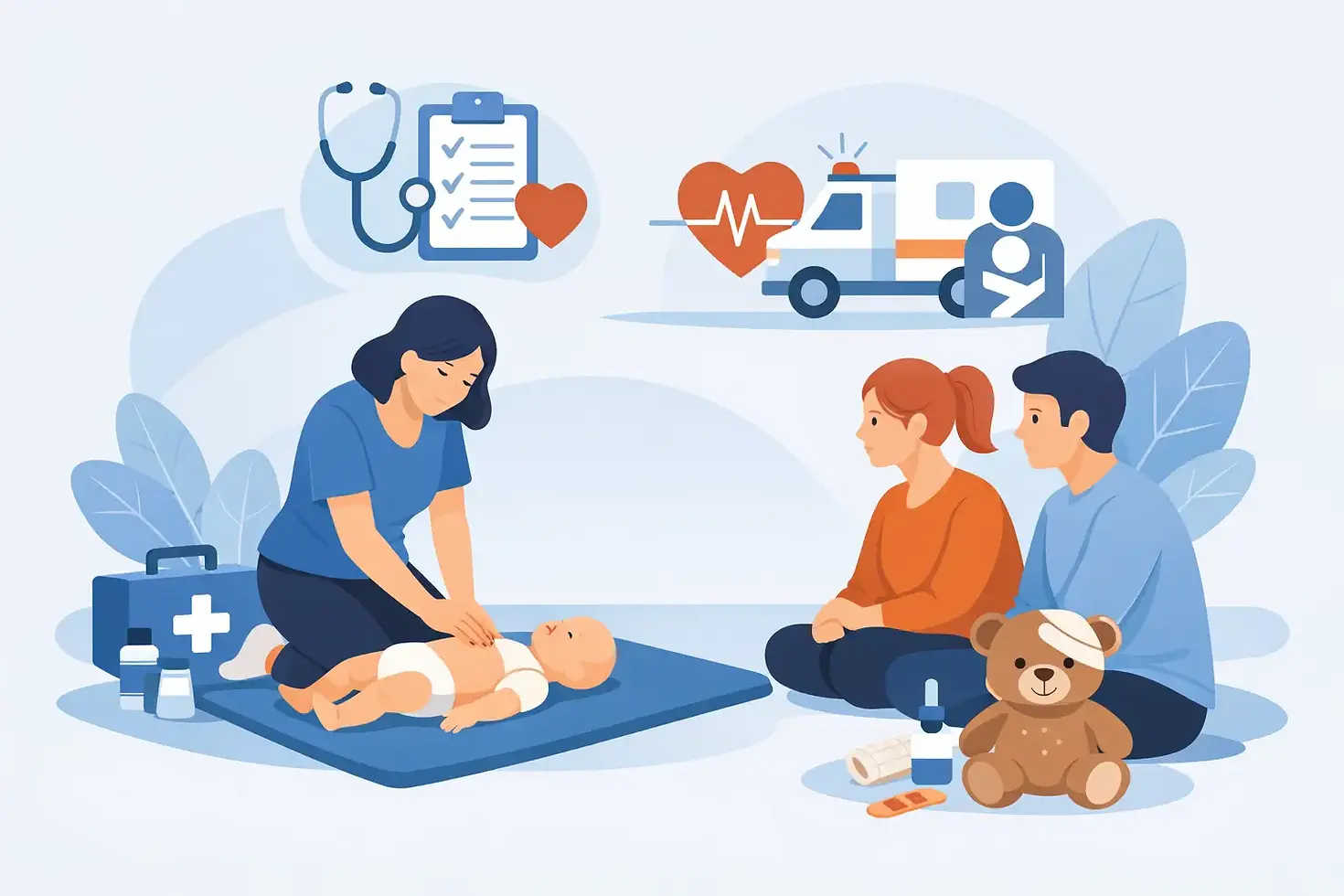
Paediatric First Aid Course: What Matters
- Coachaj Lifesaver
- May 27
- 2 min read

When a child is choking, seizing, or struggling to breathe, confidence matters as much as speed. A paediatric first aid course is not simply a compliance exercise - it is training that prepares parents, schools, nurseries, and employers to respond correctly in the moments that carry the highest risk.
What a paediatric first aid course should cover
Good training goes beyond basic theory. It should teach how to assess an infant or child, when to start CPR, how to use an AED, and how to manage choking, bleeding, burns, fractures, allergic reactions, seizures, and unresponsiveness. For organisations, this matters because childhood emergencies rarely unfold in ideal conditions. Staff need to make clear decisions under pressure, not just recall a slide deck.
The strongest courses include realistic practice with age-appropriate scenarios. Infant CPR is not the same as adult CPR, and first aid decisions for children often depend on recognising subtle signs of deterioration early. That practical difference is where quality training earns its value.
Who needs paediatric first aid training
For nurseries, schools, clubs, and childcare providers, a paediatric first aid course supports duty of care, operational readiness, and staff confidence. For parents and guardians, it provides the ability to act before professional help arrives. In higher-accountability environments, accredited training also helps demonstrate that safeguarding and risk management are being taken seriously.
There is no single format that suits every setting. A family may want short, practical instruction focused on likely home incidents. A school or employer may need certified training aligned with workplace requirements, group delivery, and attendance records for compliance purposes.
How to choose the right paediatric first aid course
Start with accreditation and instructor credibility. Then look at delivery quality. A well-run course should balance clear teaching, hands-on drills, and scenario-based assessment. If the session is too generic, too rushed, or overly theoretical, learners may leave with a certificate but little operational confidence.
It is also worth checking whether the provider can adapt training for your environment. A nursery, a corporate family benefit programme, and a field-based humanitarian team each face different risks. Lifesaver Abu Dhabi approaches training with that operational mindset, which is why tailored delivery matters as much as the syllabus itself.
A paediatric first aid course should leave people ready to recognise danger, intervene safely, and protect a child until advanced care takes over. That is the standard worth expecting.


Comments