
Paediatric First Aid Course: What Matters
- Coachaj Lifesaver
- Jun 1
- 6 min read

A child can go from settled to seriously unwell in minutes. That is why a paediatric first aid course is not a box-ticking exercise for schools, nurseries, childminders, parents or employers - it is practical preparation for the moments when speed, judgement and calm action matter most.
For anyone responsible for children, the question is rarely whether training is useful. The real question is what kind of training is fit for purpose, recognised, and realistic enough to hold up under pressure. A course that looks acceptable on paper but leaves people unsure in a real emergency does not meet the standard that duty of care demands.
Why a paediatric first aid course matters
Children are not small adults. Their airways are smaller, their bodies compensate differently, and the signs of deterioration can be less obvious to an untrained eye. A responder may have only a short window to recognise choking, breathing difficulty, a seizure, an allergic reaction or a head injury before the situation escalates.
That is why paediatric first aid training needs a specific clinical and practical focus. The priorities, techniques and judgement required for babies and children differ from adult first aid in ways that are too important to gloss over. Effective training builds confidence, but more importantly, it builds competence.
For organisations, there is also a compliance and safeguarding dimension. Schools, early years settings and childcare providers are expected to maintain an appropriate level of first aid readiness. Parents may choose training for peace of mind, but institutions need it because responsibility for children carries operational, legal and reputational consequences.
Who should take a paediatric first aid course?
The obvious groups are nursery staff, school teams, childminders and nannies. Yet the need often extends further. Sports coaches, transport teams, camp leaders, hospitality venues with family footfall, security personnel and community organisations may all find themselves first on scene when a child is hurt or unwell.
Parents and grandparents are another important group. Home is where many incidents happen - burns in the kitchen, falls on stairs, choking at mealtimes, fever-related seizures in the night. In these situations, the value of training is immediate. You are not waiting for someone else to step in.
For larger organisations, the right approach depends on the setting. A primary school needs broad staff coverage and clear escalation pathways. A nursery may need role-specific competence aligned to early years requirements. A company that runs family events may not need the same depth for all staff, but it still needs a proportionate plan.
What a good paediatric first aid course should cover
A credible course should teach more than a script. It needs to combine recognised first aid protocols with scenario-based practice that reflects the environments where children are actually cared for.
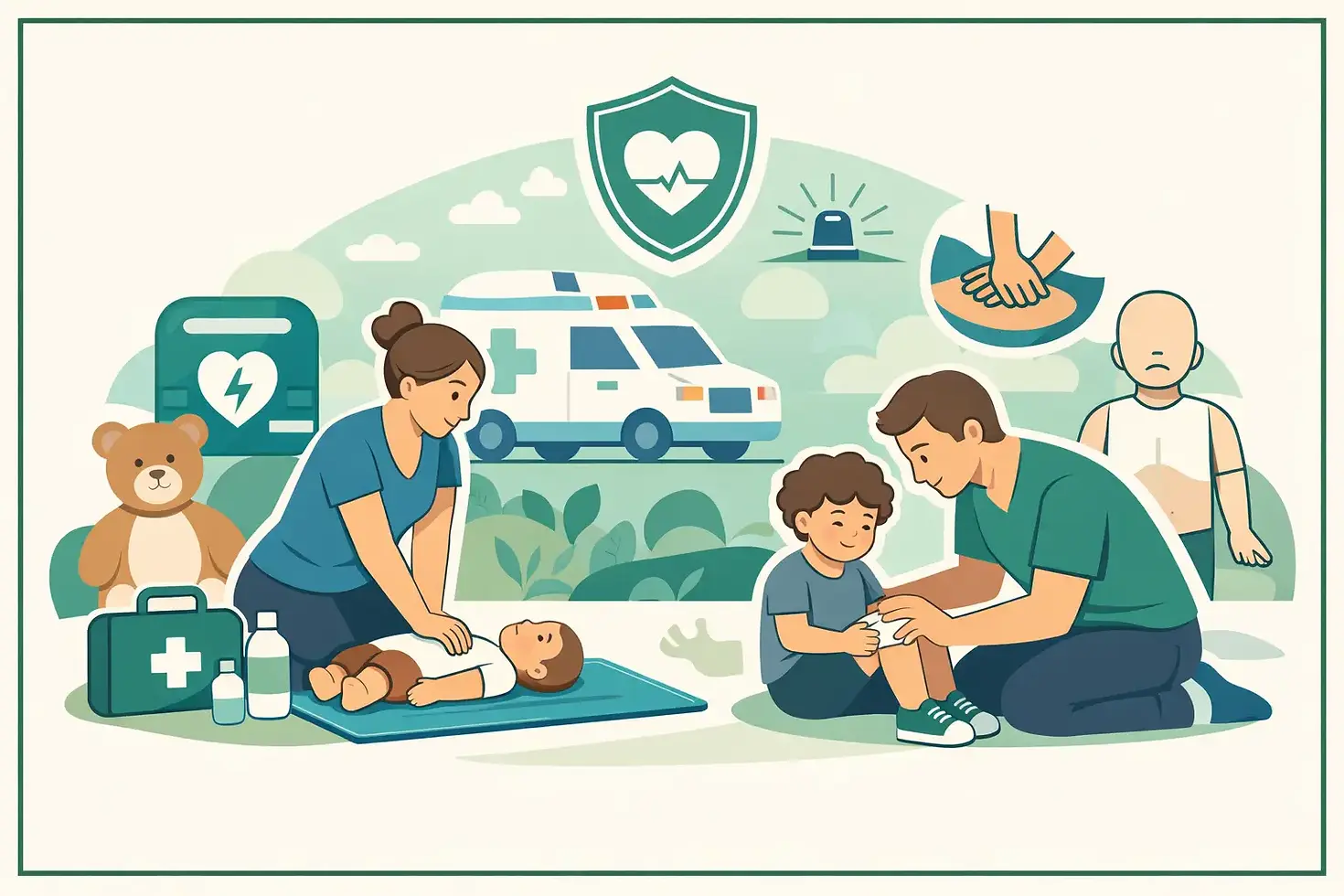
Core content usually includes assessment of an unresponsive infant or child, CPR, use of an AED where appropriate, choking, bleeding, burns, fractures, shock, seizures, febrile convulsions, allergic reactions including anaphylaxis, asthma, poisoning and head injuries. Depending on the course level, it may also cover meningitis awareness, diabetes-related emergencies and environmental injuries.
Just as important is what sits around the clinical skills. Learners should understand how to call for help efficiently, how to hand over to emergency services, how to document an incident, and how to manage bystanders or distressed family members. In schools and childcare settings, first aid does not happen in isolation - it happens inside a wider duty of care framework.
A strong provider will also address the practical reality that children do not present neatly. Symptoms overlap. Panic affects decision-making. A child may be frightened, non-verbal, or unable to explain what has happened. Good training prepares people for uncertainty, not just textbook examples.
What to look for when choosing a paediatric first aid course
The first test is accreditation and trainer credibility. If training is being used to meet workplace or setting requirements, the certification must be recognised and appropriate for that context. Ask who the awarding body is, what standards the course follows, and whether instructors have real operational teaching experience.
The second test is delivery quality. There is a clear difference between passive learning and applied learning. A course should include hands-on practice with infant and child manikins, realistic scenarios and enough instructor feedback to correct poor technique. If learners leave without physically practising key interventions, confidence may be misplaced.
The third is relevance to your environment. A school, a family home and a field-based humanitarian operation all carry different risk profiles. The best training providers adapt examples, scenarios and emphasis to suit the setting. That matters because people retain more when the material reflects their reality.
Then there is the question of format. Some organisations prefer blended learning because it reduces time away from site. That can work well for theory, but practical skills still need supervised assessment. If a provider leans too heavily on convenience at the expense of competence, the trade-off is not worth it.
Classroom, blended or on-site training?
There is no single answer for every group. Classroom training remains the strongest option where hands-on coaching, team discussion and practical assessment are priorities. It suits nurseries, schools and employers that want a controlled environment and consistent instruction.
Blended training can be efficient for busy teams, especially where staff need flexibility. It allows foundational knowledge to be completed in advance, leaving face-to-face time for practice and assessment. The benefit is reduced disruption. The limitation is that self-directed learning varies in quality depending on the learner's engagement.
On-site delivery is often the most practical choice for organisations. Staff can train in a familiar environment, scenarios can be adapted to actual risks, and managers can coordinate attendance more effectively. For institutions in Abu Dhabi managing compliance, schedules and operational continuity, that level of control is often decisive.
The difference between training for compliance and training for readiness
This is where organisations need to be honest. Some buyers are looking for the lowest-friction route to a certificate. Others want staff who can act decisively when a child stops breathing or suffers a severe allergic reaction. Those are not always the same thing.
Compliance matters. Records, validity periods, refresher schedules and recognised certification all have to be in place. But a certificate is only evidence of attendance and assessment on a given day. Readiness is broader. It depends on course quality, refresher culture, first aid kit availability, incident procedures and leadership support.
The best results come when training is treated as part of a live safety system. That means reviewing who is trained, where they are positioned, what equipment is accessible, and how emergency response works during lessons, transport, trips and after-school activities. A paediatric first aid course is a core component of that system, not the whole system.
How often should training be refreshed?
Skills fade faster than most people expect, particularly if they are rarely used. Formal certification periods provide a baseline, but high-responsibility settings should not rely on the certificate expiry date as the only trigger for review.
Short in-house refreshers, scenario drills and equipment checks help keep knowledge current. This is especially useful in schools and childcare environments where staffing changes, pupil medical needs and site risks can shift over time. Refresher planning is not administrative housekeeping - it is what keeps response capability usable.
Why provider quality matters in high-responsibility settings
When an organisation commissions training, it is making a judgement about trust. The provider is not just delivering a lesson. They are helping shape how staff respond in one of the most stressful situations they may face.
That is why serious buyers look beyond price. They assess whether the provider understands safeguarding environments, whether instruction is disciplined and current, whether certification is credible, and whether the training partner can scale across departments or sites without compromising standards. In Abu Dhabi, where institutions often need both local delivery and internationally recognised quality, that balance matters.
Providers such as Lifesaver Abu Dhabi are valued when they combine accredited instruction with operational reliability, tailored delivery and a clear understanding of duty of care across schools, families and organisations.
A well-run paediatric first aid course gives people something more durable than reassurance. It gives them a practised response, a clearer head under pressure, and a better chance of protecting a child when every minute counts.


Comments