
What to Expect From a Lifeguard Training Course
- Coachaj Lifesaver
- Jun 3
- 6 min read

A lifeguard training course is not simply about swimming strongly or watching a pool from a raised chair. It is professional safety training designed to prepare people to prevent incidents, recognise risk early and act decisively when seconds matter. For employers, schools, leisure operators and government teams, that distinction matters because the value of training is measured in readiness, not attendance.
The strongest programmes are built around one principle: prevention comes first. Rescue skills are essential, but a capable lifeguard is expected to scan effectively, enforce rules professionally, identify unsafe behaviour before it escalates and maintain calm authority in public-facing environments. That makes training as much about judgement and communication as it is about physical response.
What a lifeguard training course should actually cover
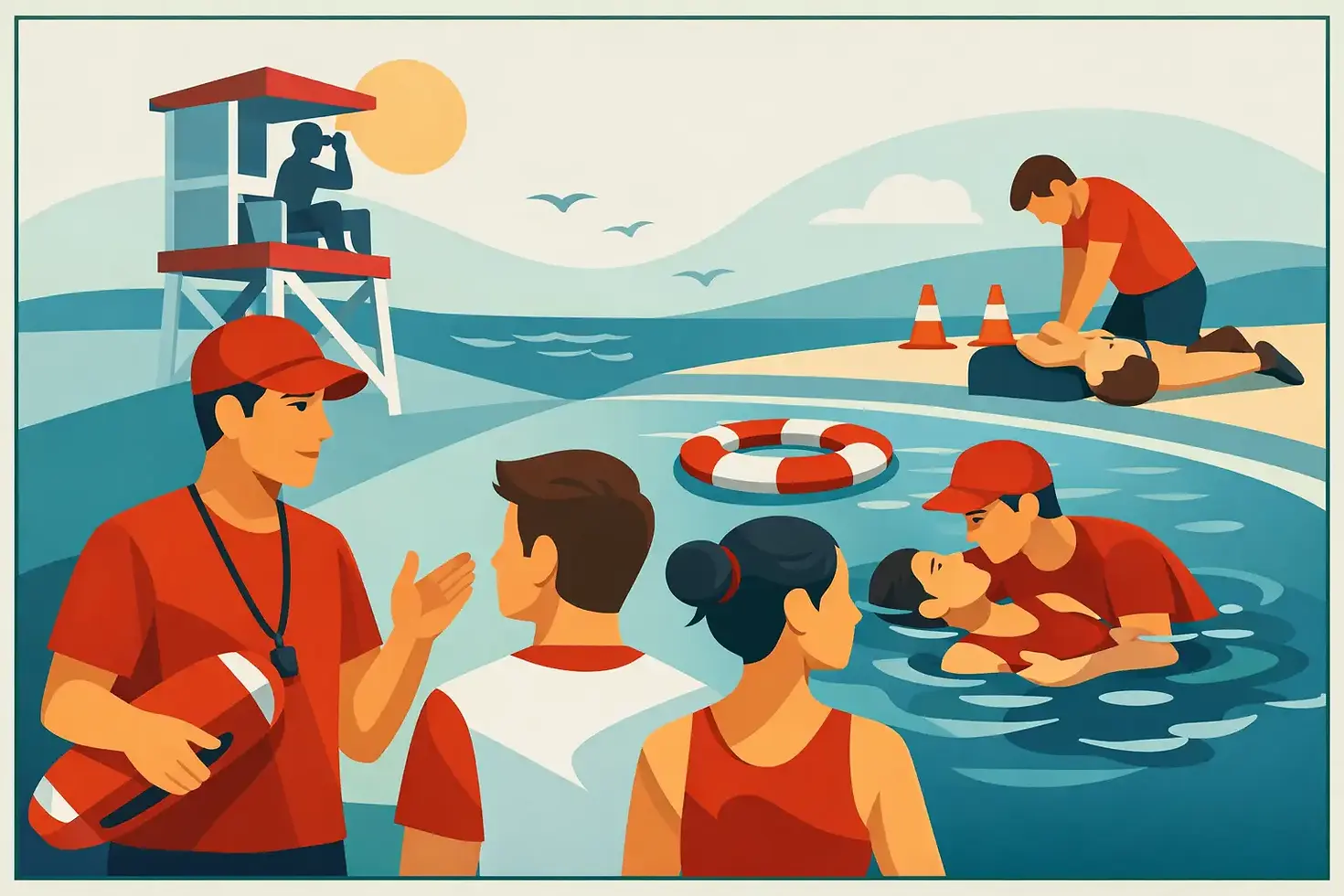
A credible lifeguard training course should move well beyond basic water confidence. Candidates need to understand surveillance techniques, casualty recognition, rescue approaches, safe water entry, towing methods, spinal injury considerations and extraction from the water. Those practical elements form the core of operational competence.
Equally important is emergency care. A lifeguard may be first on scene for drowning, near drowning, head injury, fractures, heat illness, cardiac arrest or a child in distress. Training should therefore include CPR, use of an AED where relevant, recovery position, airway management principles and incident escalation. In real settings, the handover to emergency medical services must be smooth and accurate.
There is also a procedural side that is often overlooked by first-time candidates. Lifeguards are part of a safety system. They need to know site rules, emergency action plans, reporting lines, equipment checks and how to document incidents correctly. In a commercial pool, hotel, school or community facility, this is not paperwork for its own sake. It supports compliance, protects the public and gives organisations a defensible record of action.
The reality behind lifeguard course requirements
People often ask whether being a good swimmer is enough. It is not. Most lifeguard course requirements start with a minimum level of swimming ability and fitness, but that is only the entry point. Candidates must usually demonstrate stamina, controlled breathing under pressure and the ability to perform tasks repeatedly, not once in ideal conditions.
This is where expectations need to be realistic. Some candidates are comfortable in the water but struggle with rescue technique. Others are physically fit but find casualty contact, scenario pressure or timed assessments more demanding than expected. A serious course should test all of that, because a rescue environment is rarely tidy.
For employers sponsoring staff, this has practical implications. If a candidate is being put forward for an operational role, pre-course screening is sensible. It saves time, avoids failed certification attempts and helps training providers adapt support where appropriate. In institutional settings, the best results usually come when training is aligned with the actual operating environment rather than delivered as a generic exercise.
Fitness, composure and decision-making under pressure
A lifeguard's job is physical, but the role should never be reduced to fitness alone. Endurance matters because rescues are demanding, and fatigue affects judgement. Strength matters because casualty handling, extraction and equipment use require control. Yet composure is what allows those skills to be applied properly.
Training should expose candidates to pressure in a controlled way. That may include timed swims, simulated rescues, casualty assessment drills and multi-step emergency scenarios. The purpose is not to create drama. It is to show whether a candidate can follow procedure while under stress, communicate clearly with colleagues and avoid rushed mistakes.
This is one of the main differences between recreational water confidence and professional readiness. Someone may swim well on a holiday or in a sports setting and still be unprepared for a distressed casualty, panicked bystanders or the responsibility of scene control. Good training closes that gap through repetition, correction and realistic assessment.
Why the training environment matters
Not every aquatic environment presents the same risk profile. A hotel pool, a school pool, a private club and an open-water venue each require a different operational emphasis. A course provider should understand those differences and train accordingly.
In pool-based settings, supervision density, blind spots, child safeguarding, chemical hazards and structured emergency response tend to be central. In beach or open-water settings, currents, surf conditions, visibility, distance management and environmental exposure become more significant. The right course should be matched to where the lifeguard will work, not where training is easiest to deliver.
For organisations in Abu Dhabi and the wider region, local operating conditions also matter. Heat, high user volumes, mixed-age facilities, hospitality standards and multilingual public interaction all affect frontline performance. Training that reflects the actual context is more valuable than training that simply ticks a certificate box.
Certification is important, but competence is the real standard
Certification gives employers confidence that a recognised benchmark has been met. It helps support compliance, recruitment decisions and audit readiness. That said, certification should not be confused with long-term competence.
Skills fade if they are not refreshed. CPR quality drops, scanning discipline slips and emergency procedures can become inconsistent if teams do not rehearse. That is why refresher training, scenario drills and periodic reassessment are not optional extras in well-run facilities. They are part of maintaining a safe operation.
This is particularly relevant for businesses that experience seasonal staffing changes or variable occupancy. Bringing in trained staff is one step. Keeping them operationally sharp is another. Providers such as Lifesaver Abu Dhabi typically add the most value when training is treated as part of a wider safety system, alongside first aid capability, compliance support and site-specific readiness planning.
Choosing the right lifeguard training course provider
The safest choice is rarely the cheapest or the fastest. Organisations should look for a provider that can demonstrate accredited standards, experienced instructors, clear assessment criteria and the ability to adapt delivery to the client environment. If the provider cannot explain how the course translates into operational performance, that is a warning sign.
It also helps to ask practical questions. Is the training suitable for your facility type? Does it include realistic casualty scenarios? Are emergency care components current and properly assessed? Can the provider support group delivery for corporate or institutional teams? Will records and certification be managed professionally?
There is an important trade-off here. Highly customised training can be more relevant to your operation, but standardised frameworks are useful for consistency and recognition. The right balance depends on your risk profile. A school or leisure venue may need broad, repeatable competence across multiple staff members, while a high-risk or specialist site may need more tailored response content.
Who benefits most from lifeguard training
The obvious audience is anyone seeking work as a pool or beach lifeguard. But the training has wider value. Hotels, schools, sports facilities, camps, residential compounds and event operators all benefit from having trained personnel on site. In many cases, lifeguard capability forms part of a broader duty-of-care strategy rather than a stand-alone hire.
Parents and community members may also consider this training, especially those involved in youth sport, aquatic activities or school support roles. Even where a candidate does not move into formal lifeguard employment, the discipline of prevention, rescue awareness and emergency response has clear public safety value.
For businesses and institutions, the strongest case is straightforward. A trained lifeguard presence reduces response time, improves hazard control and strengthens public confidence. In environments where children, families, guests or staff are using water facilities, that level of preparedness is part of responsible operations.
What success looks like after the course
A successful candidate leaves with more than a certificate. They should understand how to monitor water effectively, intervene early, communicate with authority and respond to emergencies without losing structure. They should also know the limits of their role and when to escalate.
For employers, success looks equally practical. You want staff who can maintain standards on a normal day and remain effective on a difficult one. That means confidence without complacency, speed without panic and procedure without hesitation.
The best training does not create a false sense of security. It creates disciplined capability. If you are selecting a lifeguard training course for yourself, your team or your facility, choose one that treats the role with the seriousness it deserves. Water safety is not built on appearances. It is built on preparation that stands up when the environment stops being predictable.
A good course should leave candidates more alert, more accountable and more useful from day one - which is exactly what safety-critical training is meant to do.


Comments