

Choosing a Hostile Environment Awareness Training Course
- Coachaj Lifesaver
- 6 days ago
- 5 min read

When a team is due to deploy into a volatile region, the risk rarely comes from a single headline threat. It comes from layered pressure - unfamiliar terrain, civil unrest, criminal activity, medical limitations, poor communications and decisions made under fatigue. A hostile environment awareness training course is designed to prepare people for that reality before they face it in the field.
This is not theatre, and it should never be treated as a tick-box exercise. For organisations with a duty of care to staff, contractors or visiting personnel, the right training can reduce preventable mistakes, strengthen incident response and improve confidence without encouraging false bravado. That distinction matters.
What a hostile environment awareness training course is really for
At its best, this type of course prepares people to work, travel or operate more safely in unstable, remote or elevated-risk settings. The purpose is not to turn civilians into security specialists. It is to help participants recognise risk early, move with more discipline, communicate clearly, respond to incidents and make better decisions when conditions deteriorate.
That means the course should focus on practical judgement as much as practical skills. Participants need to understand threat awareness, route planning, situational awareness, personal security, emergency first aid considerations, communications protocols and what to do if a situation becomes chaotic. They also need to understand their role within a wider organisational plan.
A strong programme will not promise certainty. It will teach people how to manage uncertainty.
Who typically needs this training
The audience for hostile environment training is wider than many assume. It is often associated with journalists and humanitarian workers, but corporate security teams, energy sector personnel, NGO staff, government representatives, technical specialists and contractors may all require it. Senior leaders who travel into high-risk territories can benefit as well, particularly if they are expected to make decisions during fast-moving incidents.
The level of training needed depends on the role. A field-based humanitarian team operating in remote locations may require immersive scenario-led instruction with casualty management and movement drills. A corporate executive making short visits to a politically sensitive region may need a more targeted programme focused on travel security, kidnap avoidance, pre-deployment planning and crisis response. One size rarely fits all.
That is why buyers should be cautious of generic training sold as universally suitable. Risk exposure varies by geography, task, duration, profile and support structure.
What a credible hostile environment awareness training course should cover
The most useful courses combine theory with realistic application. Participants should leave with a clearer understanding of how threats develop and how quickly normal routines can break down.
Threat recognition and situational awareness
This is the foundation. Learners need to spot behavioural cues, environmental changes and warning signs that suggest increasing danger. That could involve crowd dynamics, surveillance indicators, suspicious checkpoints, route anomalies or escalating local tension. Good training teaches awareness without feeding paranoia.
Movement, journey planning and personal security
Travel is often where exposure increases. A credible course should address vehicle procedures, convoy discipline where relevant, route selection, safe accommodation practice, check-in systems and low-profile behaviour. It should also cover what to do when plans fail, because they often do.
Incident response under pressure
Participants should work through realistic scenarios such as vehicle breakdowns, civil disturbance, armed intimidation, communications loss or sudden evacuation requirements. The value here is not memorising a script. It is learning how to slow decision-making, prioritise actions and function as part of a team.
Medical and trauma awareness
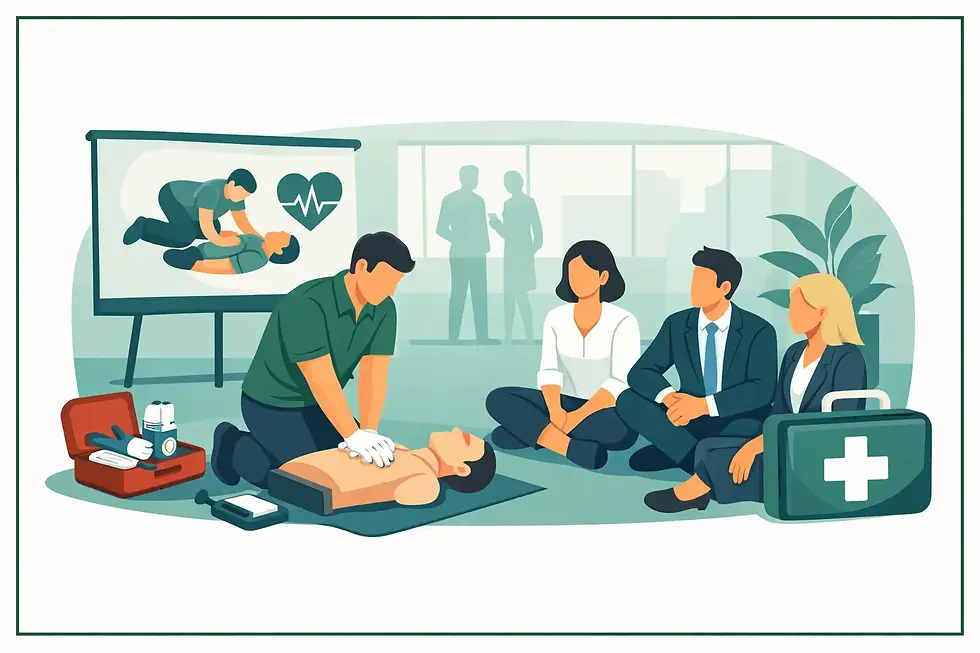
Not every programme includes the same clinical content, and that is sensible. However, in higher-risk settings, some level of emergency casualty care is often essential. The right balance depends on the operating context, medical support available and the expected time to evacuation.
Communications and reporting
Poor information flow can turn a manageable problem into a full crisis. Training should cover communication discipline, escalation thresholds, reporting structure and how to pass accurate information when stress is high. This is especially important for organisations running multiple teams across dispersed sites.
The difference between realistic training and performative training
A course can look impressive without being especially useful. Dramatic scenarios, loud simulations and military-style language may create intensity, but intensity alone does not equal learning. Training should be realistic enough to test behaviour, not so stylised that it distracts from the actual objective.
The best providers build controlled pressure around clear outcomes. Participants understand why a scenario is being run, what good performance looks like and where their decision-making needs work. They are challenged, but not overwhelmed for effect.
There is also a balance to strike around confidence. Good training increases composure. Poor training can leave participants either alarmed or overconfident. Neither is acceptable in a serious operational setting.
How to choose the right provider
For procurement teams, safety managers and operational leaders, course selection should go beyond brochure claims. Start with instructor credibility. Trainers should have relevant operational and instructional experience, but they must also know how to teach mixed groups with different levels of exposure. Field experience matters. So does the ability to translate it into disciplined learning.
Accreditation and quality assurance are equally important. Organisations need confidence that the course content, delivery standards and assessment methods meet recognised benchmarks. If training must sit within wider compliance or deployment frameworks, this becomes even more important.
Customisation is another key factor. A hostile environment awareness training course for a humanitarian deployment in a fragile setting should not mirror one designed for a corporate team visiting a higher-crime urban environment. The provider should be able to tailor scenarios, medical components and operational context to the client’s actual risk picture.
It is also worth assessing whether the training provider understands the region in which your teams operate. Local delivery capability, cultural awareness and practical logistics support can make a major difference to the quality and relevance of the programme. For organisations in the UAE and across the wider region, that local understanding often sits alongside the need for internationally recognised standards. Providers such as Lifesaver Abu Dhabi are valued when they can deliver both.
Why customisation matters more than course length
Buyers often compare courses by number of hours or days. That is understandable, but it can be misleading. A shorter programme that is tightly tailored to a defined travel profile may be more effective than a longer course full of irrelevant content.
What matters is training fit. Does it reflect the environments people will enter? Does it account for whether they are travelling alone, embedded with a team or operating with armed support? Does it consider accommodation type, transport method, local infrastructure and available medical backing? These details shape what participants actually need.
This is also where organisational maturity comes into play. Some clients need standalone learner training. Others need the course integrated into a broader readiness model that includes policy review, crisis management procedures, communications planning and deployment support. The training should serve the operation, not exist separately from it.
Common mistakes organisations make
One common mistake is sending staff on training too late. If people complete the course days before travel, there may be little time to absorb the learning, ask operational questions or align internal procedures.
Another is assuming training alone fulfils duty of care. It does not. Even an excellent course cannot compensate for poor planning, weak communication systems, unclear escalation routes or unsuitable accommodation and transport arrangements.
A third mistake is treating all travellers the same. Seniority does not reduce risk. In some settings, it increases profile and therefore exposure. The board member, technical adviser and field coordinator may each require different preparation.
The real outcome to look for
The best result is not a certificate on file. It is a person who notices more, plans better and reacts with greater control when conditions shift. It is also an organisation that can show it took reasonable, professional steps to prepare its people for foreseeable risk.
A well-designed hostile environment awareness training course supports that outcome by combining credible instruction, relevant scenarios and operational context. It should help individuals protect themselves and help organisations protect their people.
When the environment is uncertain, preparation needs to be specific, disciplined and honest about what training can and cannot do. That is where real readiness begins.

Comments