

First Aid That Works When Seconds Matter
- Coachaj Lifesaver
- 6 days ago
- 4 min read

Panic is often the real first casualty in an emergency. Effective First Aid is not about dramatic gestures or half-remembered advice. It is about calm, immediate action that protects life, prevents deterioration, and supports recovery until professional medical help takes over.
That matters in every setting - an office, a school, a construction site, a family home, or a remote field environment. The risks may differ, but the principle does not. When someone collapses, chokes, bleeds heavily, or suffers a burn, the first few minutes shape the outcome. A trained response can reduce harm, limit complications, and in some cases save a life outright.
What First Aid actually involves
First Aid is the initial care given to a person who is injured or suddenly unwell before emergency services or qualified medical personnel arrive. In practice, that can mean far more than applying a plaster or cleaning a minor wound. It includes assessing danger, checking responsiveness, opening an airway, controlling severe bleeding, placing someone in the recovery position, and performing CPR when required.
The key point is that First Aid is structured, not improvised. Good responders follow a clear process. They make the area safe, identify the most urgent threat, and act in the right order. This disciplined approach is what separates useful intervention from well-meant confusion.
Why training matters more than theory
Many people believe they could manage an emergency because they have seen basic advice online or heard it during workplace induction. That confidence often disappears under pressure. Real incidents are noisy, fast-moving, and stressful. People freeze, skip steps, or focus on the wrong injury.
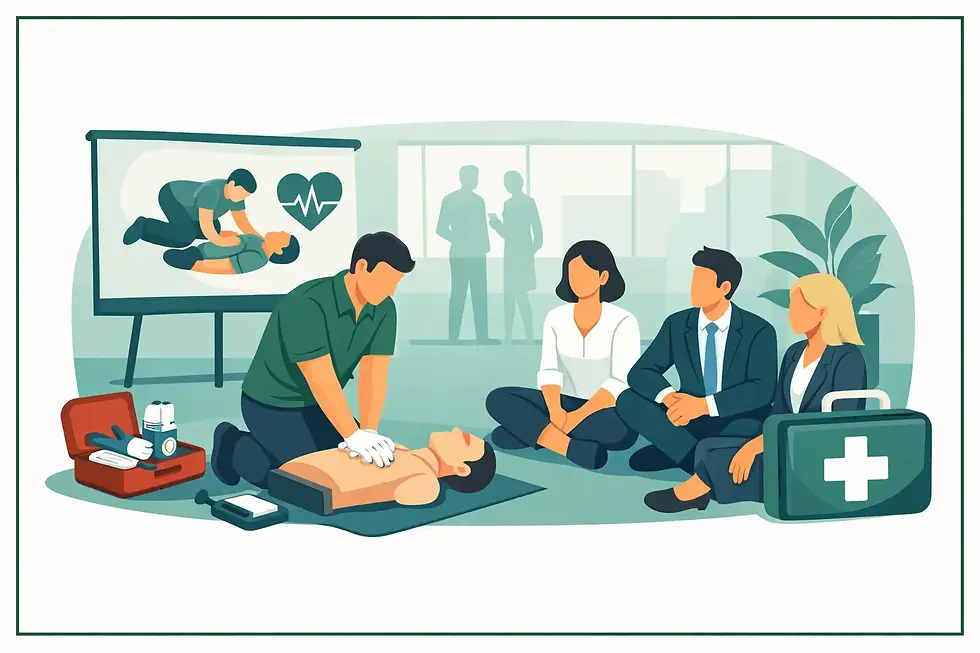
Training changes that. It builds muscle memory, decision-making, and confidence under realistic conditions. It also corrects common misconceptions. For example, not every unconscious person should be moved immediately, and not every wound should be treated the same way. A proper course teaches when to act, what to avoid, and how to adapt to the environment.
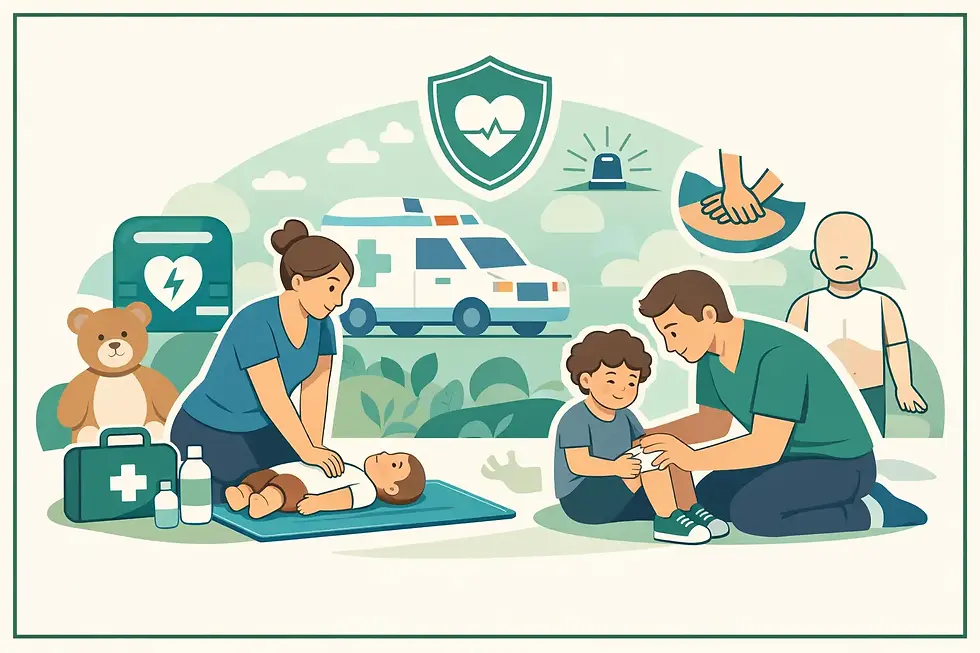
For organisations, this is not only a safety issue but a duty of care issue. A workforce that includes trained first aiders is better prepared to protect staff, visitors, contractors, and the public. For parents, teachers, and carers, the value is just as clear. Emergencies involving children demand quick judgement and calm execution.
The most common First Aid mistakes
The biggest mistakes are usually simple. People delay calling for help because they assume the problem is minor. They move a casualty without checking for further danger. They give food or drink to someone who may need surgery or who has reduced consciousness. They stop CPR too early because they are unsure of technique.
Another common issue is overconfidence with kits and equipment. A well-stocked first aid box is useful, but equipment is only as effective as the person using it. In many workplaces, kits are present to satisfy policy, yet staff have little confidence in using them properly. Compliance without competence is a weak form of readiness.
First aid in workplaces and higher-risk operations
Not every organisation needs the same level of preparation. An office may focus on slips, trips, cardiac events, and basic trauma management. A warehouse, school, industrial facility, security team, or remote project site may require more advanced capability because the hazards are greater and access to definitive care may be delayed.
This is where risk-based training becomes essential. First aid provision should reflect the environment, the number of people on site, response times, and the nature of the work. A generic approach may tick a box, but it does not always protect people when conditions are demanding.
For organisations operating in higher-risk or field-based settings, training should sit within a wider readiness plan. That may include incident reporting, evacuation procedures, communications, trauma kits, role assignments, and refresher cycles. First aid is strongest when it is part of an operational system rather than a stand-alone certificate.
What good training should deliver
A credible First Aid course should do more than explain the basics. It should provide recognised certification, practical scenarios, current protocols, and instruction that reflects the learner’s actual environment. The best programmes are tailored. A parent, a teacher, a site supervisor, and a field operator do not face the same risks, so they should not all receive identical training.
Good training also includes refreshers. Skills fade when they are not used. That is especially true for CPR, casualty assessment, and emergency decision-making. Regular practice keeps standards high and ensures that a trained person remains an effective responder rather than a lapsed certificate holder.
For organisations in Abu Dhabi and across the wider region, working with a provider that understands both international standards and local operational realities makes a measurable difference. Lifesaver Abu Dhabi approaches first aid as part of a broader safety and deployment capability, which is exactly how serious preparedness should be treated.
When an emergency happens, nobody gets extra time to prepare. The right training, delivered before the incident, is what allows ordinary people and responsible organisations to respond with control, competence, and care. That is what First Aid is for.

Comments