

Risk Management That Protects People and Operations

A risk register that sits untouched in a shared folder does not protect anyone. Risk management only delivers value when it changes what people do before work starts, while conditions are changing, and when an incident tests the organisation’s readiness. For employers, schools, field teams and public-facing operations, it is the discipline that turns duty of care into practical, accountable action.
The objective is not to eliminate every risk. That is rarely possible, and attempts to do so can stop necessary work without making it safer. The objective is to understand foreseeable harm, reduce exposure to a tolerable level, prepare people to respond, and keep checking whether controls still work in real conditions.
What risk management means in practice
Risk management is a continuous process for identifying hazards, assessing who may be harmed and how, selecting controls, assigning responsibility, and reviewing performance. It applies equally to an office, a school trip, a construction site, a remote field operation or a temporary accommodation facility.
A hazard is anything with the potential to cause harm. The risk is the likelihood of that harm occurring and the severity of the outcome. A wet entrance floor is a hazard. The risk depends on footfall, lighting, housekeeping standards, footwear, weather conditions and whether anyone is responsible for dealing with spills promptly.
This distinction matters because generic controls often fail at the point of use. A policy may state that first aid provision is available, but it does not answer whether trained people are present across every shift, whether equipment is accessible, or whether staff know how to summon help. Effective controls are specific, observable and tested.
Start with the work, not the paperwork
The strongest assessment begins where people actually work. Walk the site, speak with the people carrying out the task, observe handovers and consider what changes during busy periods, night shifts, extreme heat, maintenance work or an emergency.
This is particularly important for organisations operating in Abu Dhabi and across the region, where heat exposure, remote travel, high workforce diversity, language needs and contractor interfaces can materially affect risk. A control that works in a controlled office environment may be inadequate at an outdoor worksite or during a field deployment.
Consider the full operating picture. Who enters the area? What equipment, vehicles, chemicals or manual handling activities are involved? What happens when the usual supervisor is unavailable? Are there visitors, children, vulnerable people or lone workers whose needs require additional planning?
Near misses deserve the same attention as injuries. They are often the clearest indication that a control is weak, unclear or routinely bypassed. Treating near-miss reporting as a learning process, rather than a blame exercise, gives leaders earlier opportunities to intervene.
Assess likelihood and consequence honestly
A simple scoring matrix can help teams prioritise, but numbers should not create false confidence. Two risks with the same score may demand very different responses. A low-likelihood event with catastrophic consequences, such as a fire, security threat or medical emergency in a remote location, requires credible preparedness even if it occurs rarely.
Assessment should account for existing controls, not merely planned ones. Ask whether the measure is in place, understood, maintained and consistently followed. If the answer is uncertain, the control should not be given full credit.
For each significant risk, document the hazard, affected people, current controls, further action required, responsible person and review date. This creates an operational record rather than a one-off compliance document.
Choose controls that reduce exposure
Training and personal protective equipment are valuable, but they should not be the first answer to every hazard. The most reliable controls remove the danger or reduce dependence on perfect human behaviour.
Where possible, eliminate the task or hazard. If elimination is not practical, substitute a safer process or material, use engineering controls such as barriers and ventilation, then support these measures with procedures, supervision, training and appropriate protective equipment. The right balance depends on the activity, workforce and environment.
For example, telling staff to lift carefully is weaker than redesigning the task, reducing load weight, supplying handling aids and ensuring sufficient trained people are available. Similarly, issuing emergency equipment is not enough if staff have not practised using it under pressure.
Controls also need owners. A responsible person should have the authority, time and resources to carry out the action. Vague wording such as “management to review” encourages delay. A clear action states what will be done, by whom, by when, and how completion will be verified.
Build competence into the control plan
Many operational risks become critical when people do not recognise early warning signs or do not know their role. First aid training, fire response, evacuation procedures, safeguarding awareness, travel security and incident reporting are not separate from risk management. They are part of the control system.
Training should match the likely incidents and working context. A corporate office may need confident first aiders and evacuation marshals. A school requires staff who can respond appropriately to paediatric emergencies. Teams travelling to remote or higher-risk locations may need hostile environment preparation, communications protocols and medical contingency planning.
Certification matters, but competence matters more. People need opportunities to apply knowledge through realistic scenarios, refresh critical skills and practise decisions with the equipment and communications arrangements they will use. A trained responder who cannot locate the trauma kit, contact emergency services or direct colleagues during an incident is not fully prepared.
Lifesaver Abu Dhabi supports organisations by connecting accredited training with practical readiness, from workplace and paediatric first aid through to specialist field and deployment capability. The strongest programme is always the one designed around the client’s actual exposure, workforce and operating conditions.
Test plans before an emergency exposes the gaps
Emergency plans often look complete on paper because they describe an ideal sequence of actions. Real events are less orderly. Access routes may be blocked, a nominated first aider may be off duty, communications may fail, or a supervisor may have to make decisions with limited information.
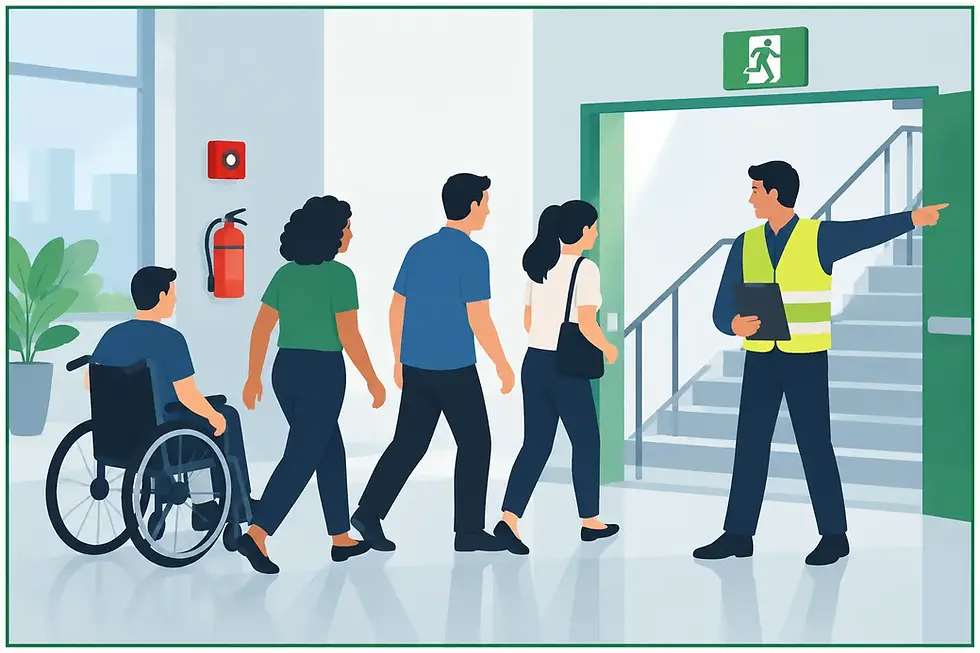
Tabletop exercises are a useful starting point, particularly for leadership teams. They allow participants to work through decisions without disrupting operations. Practical drills then show whether people can act: whether alarms are heard, assemblies are managed, equipment can be reached, first aid is delivered and external responders receive accurate information.
After every drill, incident or near miss, hold a focused review. Identify what happened, what helped, what slowed the response and what must change. Avoid turning this into a search for an individual to blame. The purpose is to strengthen the system, while still addressing wilful breaches or serious failures where necessary.
Keep risk management current as conditions change
Risk profiles do not remain static. New equipment, changing premises, seasonal weather, staff turnover, contractor activity, expansion into new locations and changes in security conditions can all make previous assessments incomplete.
Set formal review dates, but do not wait for them when there is a material change. Review immediately after an incident, significant near miss, procedural failure, regulatory change or alteration to the task. Frontline feedback should feed directly into this cycle, because the people closest to the work usually see problems first.
Leaders should also look beyond incident totals. A low injury rate can reflect good control, but it can also indicate under-reporting. Useful indicators include completion of corrective actions, drill performance, equipment inspection results, refresher training attendance, near-miss quality and recurring themes in reports.
Good governance makes this visible. Senior decision-makers need concise reporting on major risks, overdue actions, control failures and resource requirements. Safety cannot be delegated away from leadership, particularly where decisions about staffing, maintenance, travel, procurement or operational tempo create the conditions in which risk is managed.
Make preparedness part of everyday operations
Risk management works best when it is treated as normal operational discipline rather than an annual compliance exercise. It should influence induction, procurement, scheduling, site design, contractor selection and team briefings. Small, consistent checks are more valuable than an impressive document produced once a year.
The practical question for every organisation is simple: if the expected went wrong today, would your people know what to do, have what they need, and receive support quickly? Building a credible answer to that question protects people first, while giving operations the confidence to continue when pressure is highest.


Comments