
When to Use Adrenaline Injectors in an Emergency

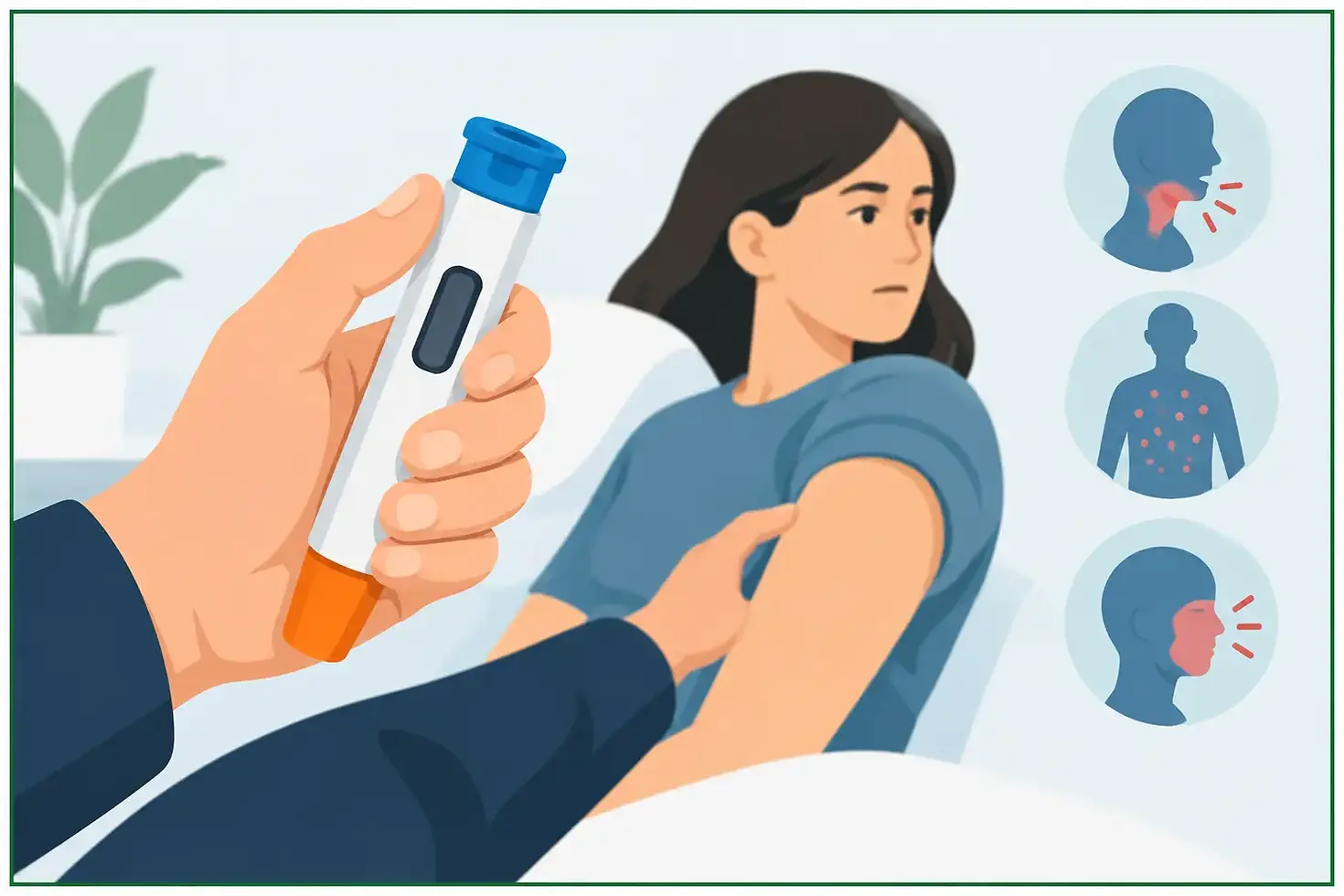
A person who has eaten, been stung, or taken medication may initially say they feel strange, then rapidly develop breathing difficulty, swelling or collapse. This is the moment when knowing when to use adrenaline injectors matters. In suspected anaphylaxis, hesitation can be more dangerous than giving the prescribed treatment. Act promptly, call for emergency help and continue to monitor the person until clinical care takes over.
When to use adrenaline injectors: recognising anaphylaxis
An adrenaline injector, often called an adrenaline auto-injector, is emergency treatment for anaphylaxis: a severe, potentially life-threatening allergic reaction. It is not intended for a mild, isolated rash or slight itch where the person is otherwise well. It is used when an allergic reaction affects breathing, circulation or consciousness, or when serious symptoms are developing quickly after likely allergen exposure.
Treat suspected anaphylaxis immediately if the person has one or more of the following signs after exposure to a known or possible allergen:
difficult, noisy or wheezy breathing, a persistent cough, shortness of breath, or a tight throat
swelling of the tongue, throat, lips or face, particularly where it affects speech, swallowing or breathing
a hoarse voice, trouble speaking, or the sensation that the throat is closing
dizziness, confusion, extreme drowsiness, fainting, pale or clammy skin, or signs of collapse
in babies and young children, sudden floppiness, unusual quietness, persistent coughing, or a change in voice or cry after eating or exposure
A widespread rash, hives, vomiting or abdominal pain can occur during an allergic reaction. On their own, these symptoms may not always mean anaphylaxis. However, they become much more concerning when combined with breathing problems, throat symptoms, faintness or marked lethargy. In young children, repeated vomiting following exposure to a known allergen should be treated seriously, particularly if other symptoms are present.
The key operational principle is straightforward: if anaphylaxis is suspected, use the person’s prescribed adrenaline injector without delay. You do not need to wait for every possible symptom to appear.
Why prompt action is safer than waiting
Anaphylaxis can worsen within minutes. Adrenaline works by helping to open the airways, support blood pressure and reduce swelling. Antihistamines do not replace adrenaline in anaphylaxis. They may help skin symptoms, but they do not treat airway swelling, breathing difficulty or shock.
A common error is to wait and see whether the reaction settles. Another is to administer an antihistamine first and delay the injector. Both can waste critical time. If the person has an individual allergy action plan, follow it. If signs point to anaphylaxis, the injector is the first-line emergency treatment.
There are situations where uncertainty is understandable. Asthma symptoms, panic, a fainting episode and an allergic reaction can sometimes appear similar at first. Yet if somebody with a known severe allergy has breathing difficulty or becomes unwell after exposure to a likely trigger, it is safer to treat it as anaphylaxis. This is especially true where asthma is also present, as asthma can increase the risk of a severe outcome.
What to do after using an injector
Using the injector is not the end of the response. Anaphylaxis always requires emergency medical assessment, even if the person appears to recover quickly.
Call the local emergency services immediately. In Abu Dhabi and across the UAE, request an ambulance by calling 998. State that the person is experiencing suspected anaphylaxis and that adrenaline has been given. If another person is present, ask them to make the call while you stay with the casualty.
Keep the person in the safest position for their symptoms. If they feel faint or show signs of shock, lay them flat and raise their legs if practical. If breathing is difficult, they may need to sit with their legs out straight to help breathing. Do not allow them to stand or walk, even if they say they feel better. A sudden change in position can worsen their condition.
If the person is unconscious and breathing normally, place them in the recovery position. If they are not breathing normally, start CPR and follow emergency call-handler instructions. If they are pregnant, position them on their left side where possible.
Make a note of the time the injector was used. If symptoms do not improve after five minutes, or return before help arrives, use a second injector if one is available and it is prescribed for the person. Many people at risk of anaphylaxis are advised to carry two devices for this reason. Give the used injector to the ambulance crew or tell them its brand and the time it was administered.
Using the device safely
Different brands of adrenaline injector have different instructions, needle ends and safety caps. A trained responder should still check the label and follow the instructions printed on the device. In an emergency, do not spend so long reading instructions that treatment is delayed, but do not rely on memory alone if the device is unfamiliar.
In general, the injector is placed against the outer mid-thigh. It can usually be given through clothing, provided there are no thick seams, hard objects or items in the pocket. Hold the person’s leg firmly, particularly with a child, as sudden movement can cause injury. Never place fingers over either end of the device, and do not inject into the hand, foot, buttock or any area other than the outer thigh.
After use, the device must not be reused. Keep it safely away from others until handed to medical professionals. Accidental injection into a finger or hand requires urgent medical attention.
For workplaces, schools, camps and remote sites, the practical issue is not simply possessing devices. Staff need to know where they are kept, who is authorised under local policy to assist, how to contact emergency services, and how the incident will be handed over. A device locked in an inaccessible cabinet, or a team uncertain about its emergency protocol, is not a reliable control measure.
Individual plans, training and duty of care
Anyone prescribed an adrenaline injector should have an up-to-date allergy action plan from their clinician. Families, colleagues, teachers, supervisors and close friends should know where the injector is carried and what symptoms are likely to signal a severe reaction. Consent, safeguarding requirements and organisational policy should be addressed before an emergency occurs, not during one.
For organisations, risk assessment should consider food provision, catering contractors, medication procedures, insect exposure, remote operations and access to ambulance services. The appropriate response plan will vary. A nursery needs clear arrangements for children, parental information and staff cover. A corporate site may need trained first aiders across shifts and a defined response for visitors. Field teams operating far from hospital care may require more detailed medical escalation and communications planning.
Training is central because anaphylaxis scenarios are time-critical and emotionally demanding. People need practice in recognising symptoms, locating equipment, using trainer devices and communicating clearly with emergency services. They also need to understand the boundaries of their role: follow the person’s prescribed plan where available, give emergency assistance in good faith within training and policy, and ensure professional care is obtained.
Lifesaver Abu Dhabi delivers practical first aid training that helps workplaces, schools and families build that readiness into real operating procedures, rather than relying on a written policy alone.
Common mistakes that create avoidable risk
The most serious mistake is delaying adrenaline because the person does not yet look critically unwell. Severe reactions do not always begin dramatically. A tingling mouth, throat discomfort, repeated cough or sudden change in behaviour after allergen exposure can be an early warning.
It is also unsafe to let a person drive themselves to hospital, walk to the clinic or return to activity after treatment. Improvement can be temporary, and symptoms can recur. Emergency observation is needed after suspected anaphylaxis.
Finally, do not assume that a previous mild reaction guarantees a mild reaction next time. Allergic responses can be unpredictable. Encourage anyone with a prescribed injector to check expiry dates, store it in line with manufacturer guidance, carry it consistently and replace it promptly after use or expiry.
Preparedness is not about creating alarm. It is about giving a family member, colleague, pupil or visitor the best possible chance when minutes matter. Recognise the warning signs, use prescribed adrenaline promptly for suspected anaphylaxis, call 998, and stay with the person until help arrives.



Comments